Showing posts with label Social Cultural Animation. Show all posts

Saturday, August 8, 2009

We Love Puppets!!!


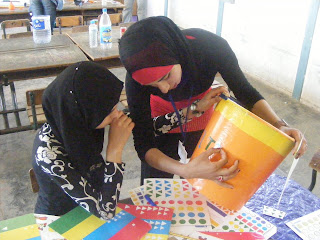
In the middle of the project of the Social Cultural Center, the alumnos were in need of a distraction for at least a day. And we immediatly jumped at the opportunity to host the Puppet Mistress, Lady Sache. The idea was simple enough...show the students how to use puppets as a tool to teacher with.

In a hour and a half the students had to write two different dialogues, one which respected a certain human right and another which did not. Create the different puppet characters and perform their sketch infront of the group.


From the first minute that the students got their hands of needle and thread and begin to create, we had a great time and learned alot.


Little by little we realized the power of a puppet. A costume, a face, a little bit of color and wer have a way to resolve conflicts, talk about a difficult topic, or propose an idea. We were amazed at the potential of the workshop.


Alineación al centro
¡¡¡We Love Puppets!!!


Project Part 3

We continue with the different phases of the Project for a Social-Cultural Center For Youth in Larache
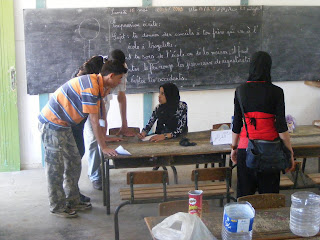
Using the lesson from the third chapter: Analysis of the Reality the students created questionaries to gather data about the project and to have some research and real data to base their ideas upon. On a cloudy monday we gathered together by the boardwalk to talk with the public about the lack of sporting and social-cultural centers here in Larache


At the moment of encounter. Each students had to perform 10 questionaries at random with the public.
They worked together and created the questionaire by themselves
Here is the questionaire:

  1. name
  2. age
  3. sex
  4. occupation
  5. education
  6. education of their mother/ father
  7. occupation of father/ mother
  8. Are you a member of an association?
  9. Yes...what association
  10. No...Why Not?
  11. For you, what does the phrase "Social-Cultural Center" signify?
  12. What kind of activites would you like to see in a center such as this?
  13. Do you believe that this center could reduce the number of problems that affect young people in Larache?
  14. Suggestions?


Each student had a hour and a half to fill out the ten surveys

But for me, it just wasn´t enough, I wanted to continue doing surveys. Simply asking people questions you could see that they were inspired by the possibility of such an idea. It was amazing how the light just lit up in their eyes...and indeed I am fascinated by the power of just simply asking, Why not?

As always we did an evaluation by the river Lixus after completing the activity. Here we had an opportunity to relate our own experiences and the mistakes we made while we were performing the surveys.

Friday, July 3, 2009

Chapter 4 The Project

CHAPTER 4: How to create and plan a social-cultural project

The Goals of this chapter are: To teach the members of the course how to design and plan the different activities that they would like to develop with their association or as an individual. With that goal in mind they will adquire the fundamental concepts of a social cultural project.


The first part is to learn the difference between a plan, a project, and a program.


Here to the instructor, Seloua, uses a brillant technique. We get rid of the chairs and sit all together on the floor. One single level, there is no professor nor student, we are all here learning together. I loved the idea! Now that we had gotten the first part down the students could begin to go through the different steps of planing that go into a social cultural project.

The different phases are:
Analysis of the Reality
Title of Project
Type of Project
Justification
Goals
Methodology
Activities
Expected Results
Time Management and Schedule
Budget
Evaluation
For hands on learning and in order help teach the lessons we invent an imaginary project. Each group will be designated a specific part of the project. Through the putting together of the project the students will discover parts of the learning process that doesnt come from lectures.
Its a long process, the project is complicated and requires a lot of work...but even so we are moving along very nicely. Thanks to the all of the students this year who amaze me everyday with their relentless dedication and hardworking spirit.

Monday, June 15, 2009

A Dream Come True

On the outskirts of Larache, there lies a village, which is poor and abandoned. Rakada, hidden and forgotten behind a simple dirt path, is located some 7 miles from Larache. . Only 200 meters separates the village from the Atlantic ocean and this place is a jumping off point for drugs on their way to Spain and illegal immigrants that dream of making to the Spanish coasts. For young people, to be born here means to grow up in a world where life is difficult and few will be able to ever escape the harsh reality of life here. As for the girls, many will never have the opportunity to study more than the first six years of elementary school. Here there are no middle or high schools and the only option to continue would be to travel to Larache, 10 km from Rakada. For many of the parents the city is a dangerous world and they prefer that their daughter stays in the house to help the family instead of sending her off, away from the watchful eye of her brothers, cousins, etc. For the boys, if they don't get involved with the drug mafias they will pass an adolescence trapped inside of a dark world where there are plenty of drugs everywhere but there are no job opportunities. Frustrated, weak, and defeated by the village life and the routine of a drug addict they will pass their days dreaming of an easier life in the city or in Spain. When we think of international aid, when we think of the people that need us more than anyone, they are places like this, like Rakada, that ask for whatever little help we can offer. The truth is that there are thousands Rakadas in Morocco and thousands and thousands of children who will have to grow up in an environment like this one. With confidence in our ability to make an impact, the help of TS-CPLP, individuals in Spain, and local associations we came together to plan an activity of animation to bring a little bit of light, joy, and education to the children of Rakada. Our instructor and friend in the course, Seloua, is a teacher here and she took care of the huge task of facilitating for us access to the school and the community. For a week the students in the course, besides their normal responsibilities, worked to prepare the activity. Come now, with us and discover the beauty of the work that these socio-cultural monitors do and the things that are possible with a little bit of money, a voluntary spirit that has no end, and a group of children that need to laugh, paint, create things, and feel good about themselves and the world that they live in.
Before Getting Started There Was Some Prep Work To Get Done
Everybody Participated

9:00-10:00
10:30-11:30 Our Monitors Warm Up The Crowd

They themselves didn't hesitate to demonstrate their artistic talent.
It Seems That For Every Part of the World There is a Rap Star...

And at 11:30 we could get started with the workshops
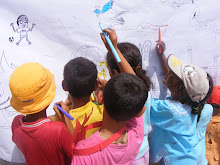
Arts and Crafts
Workshop on Raising Awareness of Recycling and the Environment
Two Parts
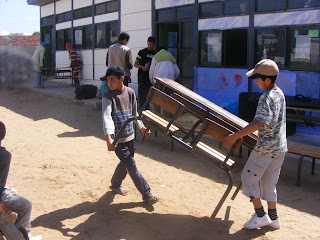
1)Collect Trash Around the School Zone and Raise Awareness Amongst the Students About the Importance of Respecting the Environment
Art Workshop
The Grand Finale...Our Lovable Clowns Haninu and Fininu
Everybody is Loving the Performance
The children said that it was not only the first time that someone had come from outside to do something for the public but for many of the children it was the first time in their life that they had seen a clown!
Thanks to everyone who made this idea a reality. On this day, 120 children had the opportunity to have fun, play, and feel good.
¡¡¡Chukran!!!

Wednesday, May 20, 2009

The Problem Tree

Workshop "The Problem Tree"

After finishing with the first two parts of the course, we continue our study into socio cultural animation.

In this part of the training course we are studying Analysis of Reality. Again translation does not do me much justice, so while I search for a better word, I could sum it up as all the things that we use to analyze a particular place where we want to work. In order to begin any type of social work, of course it is necessary to do a further investigation into the area where you are going to work. That would be the general idea for this module.

During the instruction of Analysis of Reality the students learned...
0. How to conduct an observation of a particular area/place of study.
0. How to design a questionnaire.
0. Proper techniques when asking people to fill out a questionnaire.
0. Different types of interviews.
0. Research of government sources and resource materials.

The students themselves created a questionnaire and were responsible with interviewing people on the street at random about education here in Morocco. This was done to help us prepare for what was the biggest part of this part of the course, The Problem Tree. As for anyone working in a social field, we are always confronted with various problems in our society. Now in order to guide these into a project we have to a good understanding of the chain of cause and effect of the various problems that are present in the area we want to work in. For this we use the problem tree:
To help with the instruction of the Problem Tree we relied on the assistance of a team of specialists from Spain.


Here they are:Thanks for all the help guys!!! You did a great job!

Tuesday, May 19, 2009

The Bridge

The Bridge


Today’s class has served as a summary of all the material that we have been working on during the last month. Over this period we have been focusing on such things like:
  • the responsibility of the monitor as a transmitter of knowledge, attitudes, and abilities,
  • the monitor and the group
  • how to perform an evaluation
  • the difference in the capabilities of the individual versus the group
  • communication,
  • problem solving,
  • team work,
  • the role of the individual in society,
  • and other basic concepts of sociocultural animation

The material during this first month is of utmost importance as it is going to serve as the guidelines that will carry us throughout the duration of the course.

As a final activity to recap all the learned during the last three weeks the instructor created an activity ,The Bridge, as a way to regroup all the material in a way that is entertaining, creative, and productive.

The Bridge works like this:

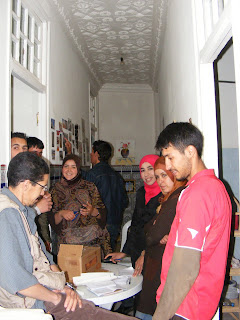
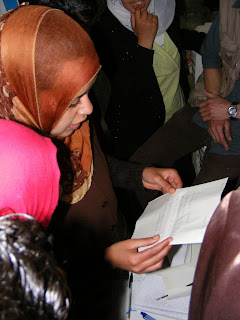
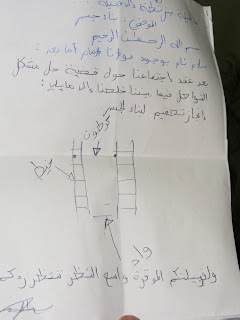
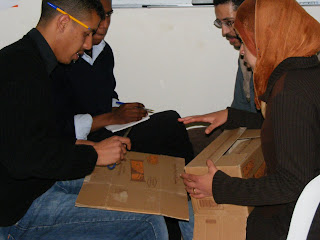
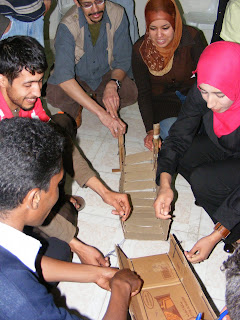
There are two villages. These two villages are separated by a river. This river has made communication between the two villages difficult, practically impossible. The students are divided into the two villages. Each village is given a carton box, scissors and two meters of string. The objective of the activity is to construct with the given materials a bridge that crosses the river. The two villages, of course, cannot communicate drectly with each other, each village is permitted to send two letters to the other village and permitted two meetings between the designated representatives of the two villages.

The activity demands concentration, dialogue between the group, team work, division of responsibilities, oral and written communication, not to mention some creativity. It was a fantastic way to bring to an end the first two parts of the course. In the end, both groups used the concepts learned in the first three weeks of class to solve the task and successfully completed the bridge although it wasn’t perfect it was strong enough to pass the test.


Village Number One
Village Number TwoThe First Letter

Planning the bridge...Meeting of the two villages

And Voila...The Bridge


Thursday, April 9, 2009

Inauguration of the Third Course in Socio Cultural Animation For the Associations of Larache

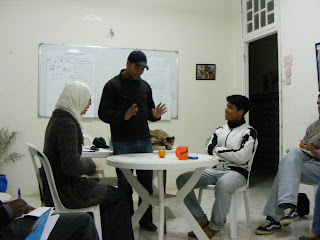
After completing the course in 2006 and 2008, I am very proud to be present to you the opening of the course, now in its third year, 2009. This past Wednesday was the inauguration of the Third Course of Social Cultural Animation presented by Tareas Solidarias Caravana Por La Paz in Larache.

When I was first hired for the job the concept by name was completely new to me. But, never being one afraid of trying new things, this exciting new challenge offered by this innovative style of education immediately attracted me to the job position. Socio-cultural animation is relatively unknown back in the United States and I am happy to do my best to give life to the term for the people back home. Socio-cultural animation encompasses so many of the things that I believe in and build my life around and its exciting for me to have the chance to once again bring the concept to a new group of young people here through the work of this NGO.
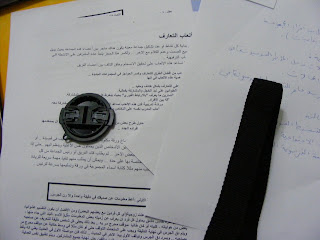
So for those who are not familiar with animacion socio cultural...


What is Social Cultural Animation?


Okay the first part, socio-cultural, that is easy enough, it’s the word animation that is a bit difficult to grasp. In English animation doesn’t mean much. Personally, it makes me think of cartoons, the process of creating motion and stories through images. But in other languages, the word animation means to breathe life into something, to give it energy to it, to make it move, to dynamize, to create action, thought, and consciousness in the object that was once still. To bring the idea into a closer context we can find similarities in English by thinking of animation as a combination of three similar concepts: community education, social pedagogy and informal education, yet the three together still don’t do the concept justice.

It’s to give life, to create feeling, to move, to motivate, to energize, to accompany, to communicate, to help grow.

If I could borrow from the wonderful prepared material by our volunteers in Spain to help explain the term:

“It could be described as:
• A process directed towards the organization of people to carry out projects and initiatives from a cultural viewpoint towards a goal of social development or progress. The four pillars of the sociocultural animation are: the culture, the organization of individuals, projects and initatives, and social development.
• A series of actions which offer the individual the possibility to transform themselves into an agent of their own personal development and that of their community, which generate processes of participation, respond to real needs taking into account the centers of interest of the persons involved and that is based upon a pedagogy that is active and dynamic.
• A privileged instrument to make possible a situation of cultural democracy
• A social technology, based in a participative form of pedagogy, which acts in different aspects of the quality of life of a person, through the participation of the people in their own social development.”

In the course we teach that socio-cultural animation basically states that each person is responsible for his own destiny, that we create the society and the area that we live in, for we are not just simple observers but actors in the dynamic between people and the institutions and mechanisms that affect our lives.

One former student described it as: “If we put together all of the areas of our life that are grouped into socio-cultural animation we discover that it is a factor in about 95% of our daily life. Taking this course is something that can actually change your life.”

Yet, here in the less developed world, Africa, and Morocco in particular it’s can be challenging to get young people to believe in such an idea when they are taught in society a negative and powerless image of themselves and the world around them. The idea is continuously reinforced that poor is poor and brown is black and some people are on top and the majority on the bottom and there is nothing you can do about it but to put yourself in line and become part of the system. So, there is a formative educative process that is needed. And even then its for still not easy to get someone to believe when society and culture have trained them not to.


But enough talking for now … come and get to know the students of this year:


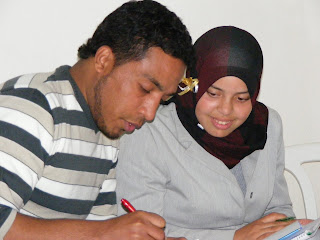
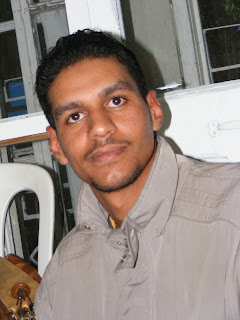
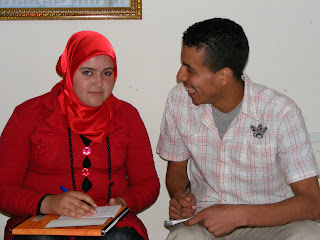
It’s a group of 13 students, (we are hoping that it eventually increases to 20) of seven girls and six guys. Among them there are high school students, a young leader of the first youth network in Larache, young people that work in the service industry, carpenters, builders, a bright, creative young lady with a degree in sociology, volunteers from associations that work with children, professors of “free” education and young people that have finished high school and are now pursuing additional training in various fields. They come from diverse associations and it’s a group that is intelligent, motivated, and beautiful…very beautiful.



Thanks!!!

And a special thanks goes out to Mark Smith for the helpful description of socio-cultural animation. Smith, Mark K. (1999, 2009) 'Animateurs, animation and fostering learning and change', the encyclopedia of informal education. Here is his work which does a great job of explaining the concept of socio-cultural animation
[www.infed.org/animate/b-animat.htm] If anybody would like to know more about the field of sociocultural animation, check out the website above.